MedReminder
Designing and Iterating a Reminder Device for Patients with Neurological Disorders
Conner Cherry · Mentor: Michael Revel
Why I Built It
The idea began in early 2025, inspired by my grandmother’s experience with late-stage Alzheimer’s and the healthcare challenges I heard about as the son of a nurse. I wanted to explore a portable, intuitive reminder that could help people retain more independence.
The goal was a device that plays a prerecorded message from a loved one at set times, alongside visual cues to take medication. Familiar voices were part of the intended design for a more reassuring experience. The project went through three design–prototype cycles, using PLA 3D prints, inexpensive electronics, and modular components to keep it accessible to other builders.
Version 1: A Proof of Concept
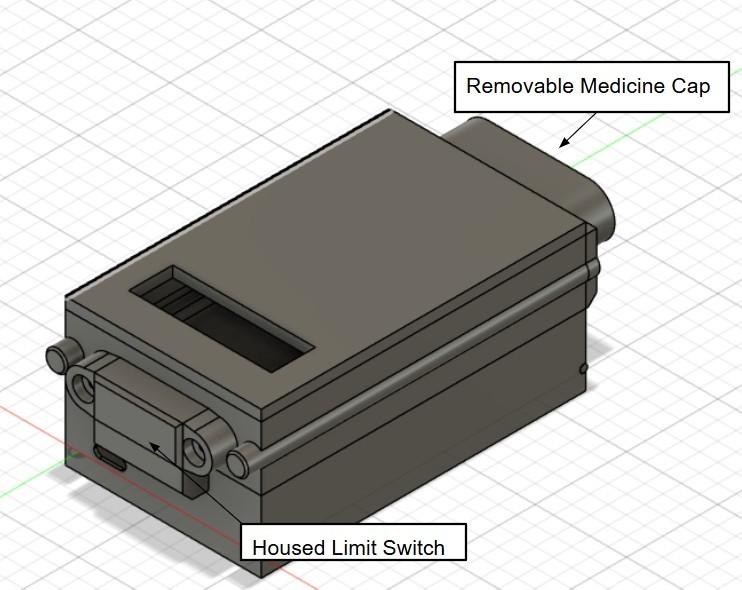
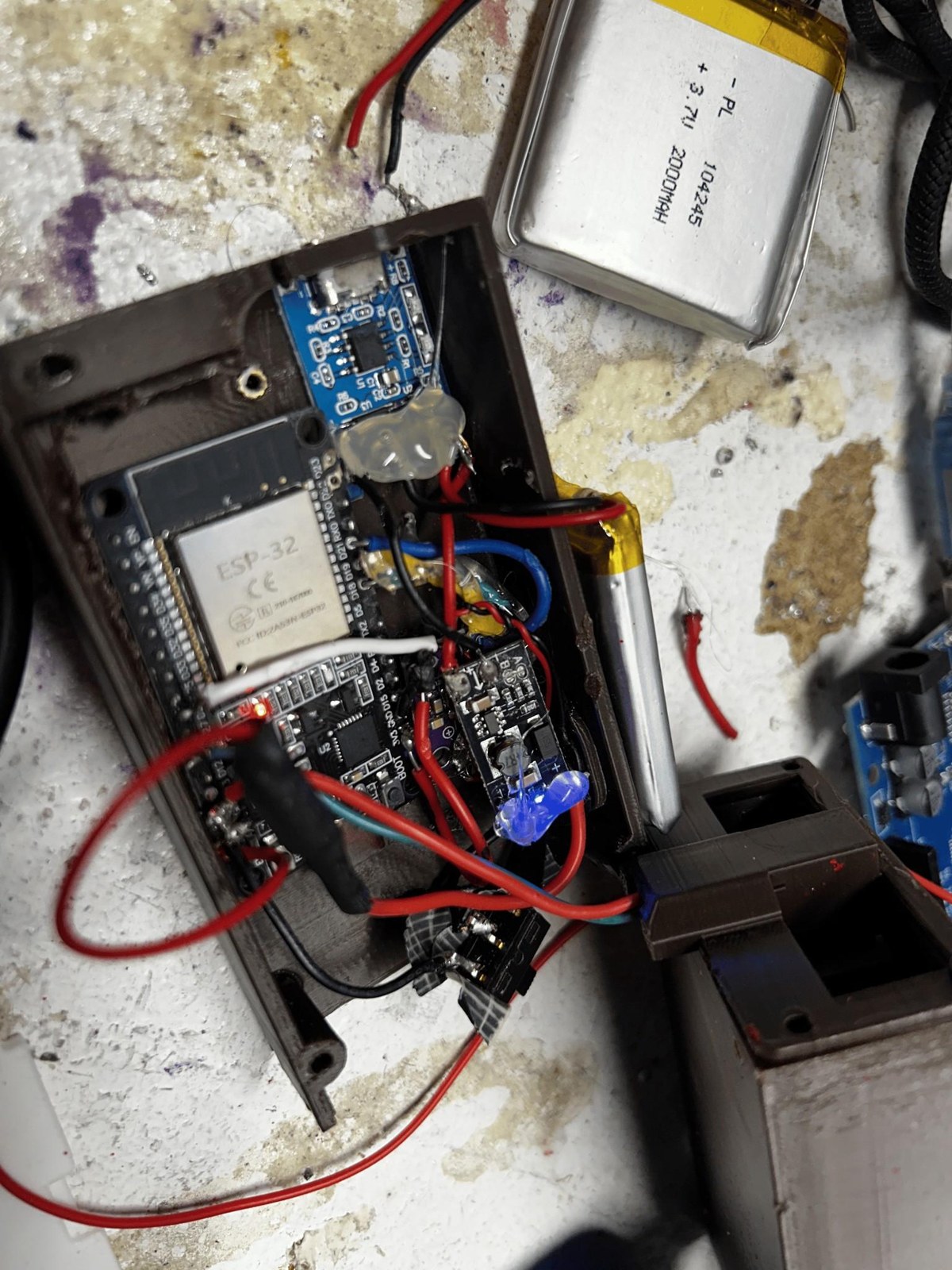
The earliest concept resembled an inhaler and included water to help with swallowing. I quickly moved to a boxier design with one large medication capsule and a sliding mechanism. Modules were mounted with heat-set inserts.
I chose an ESP32 WROOM board for its cost and eventual Wi-Fi capability. Although I initially planned to use an SD card, the first prototype used code adapted from XTronical to store audio as HEX data directly on the board. Alarm times had to be set in the Arduino IDE. Using millis() as a clock introduced time drift.
The prototype held only one dose, lacked Wi-Fi setup, required programming knowledge, and had a slider that was too stiff to operate easily.
Version 2: Two Compartments and Better Timing
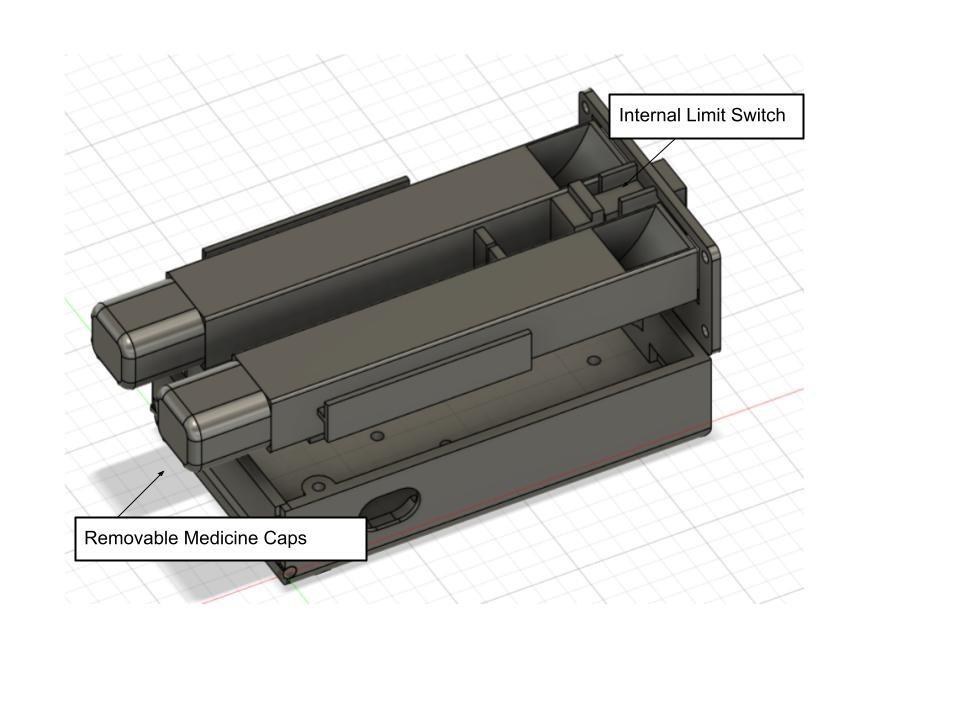
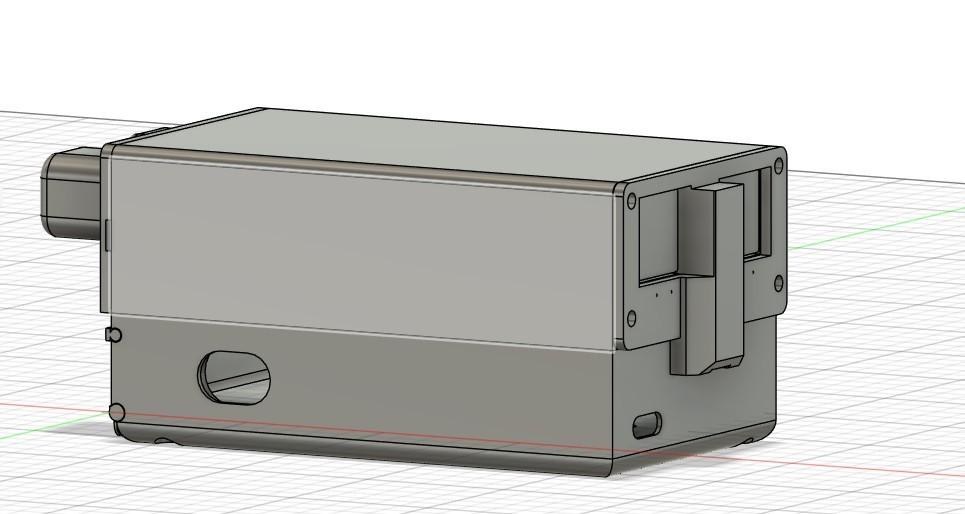
The second design added two storage compartments with spring-loaded sliders. Limit switches in the front face and slider retainers monitored the mechanism. I added voice prompts and a real-time clock (RTC) module to address unreliable timing.
This version still held few doses, had an awkward dispensing mechanism, was unreliable to trigger, and made the internals difficult to reach. Those problems drove the next redesign.
Version 3: A Circular, Serviceable Design
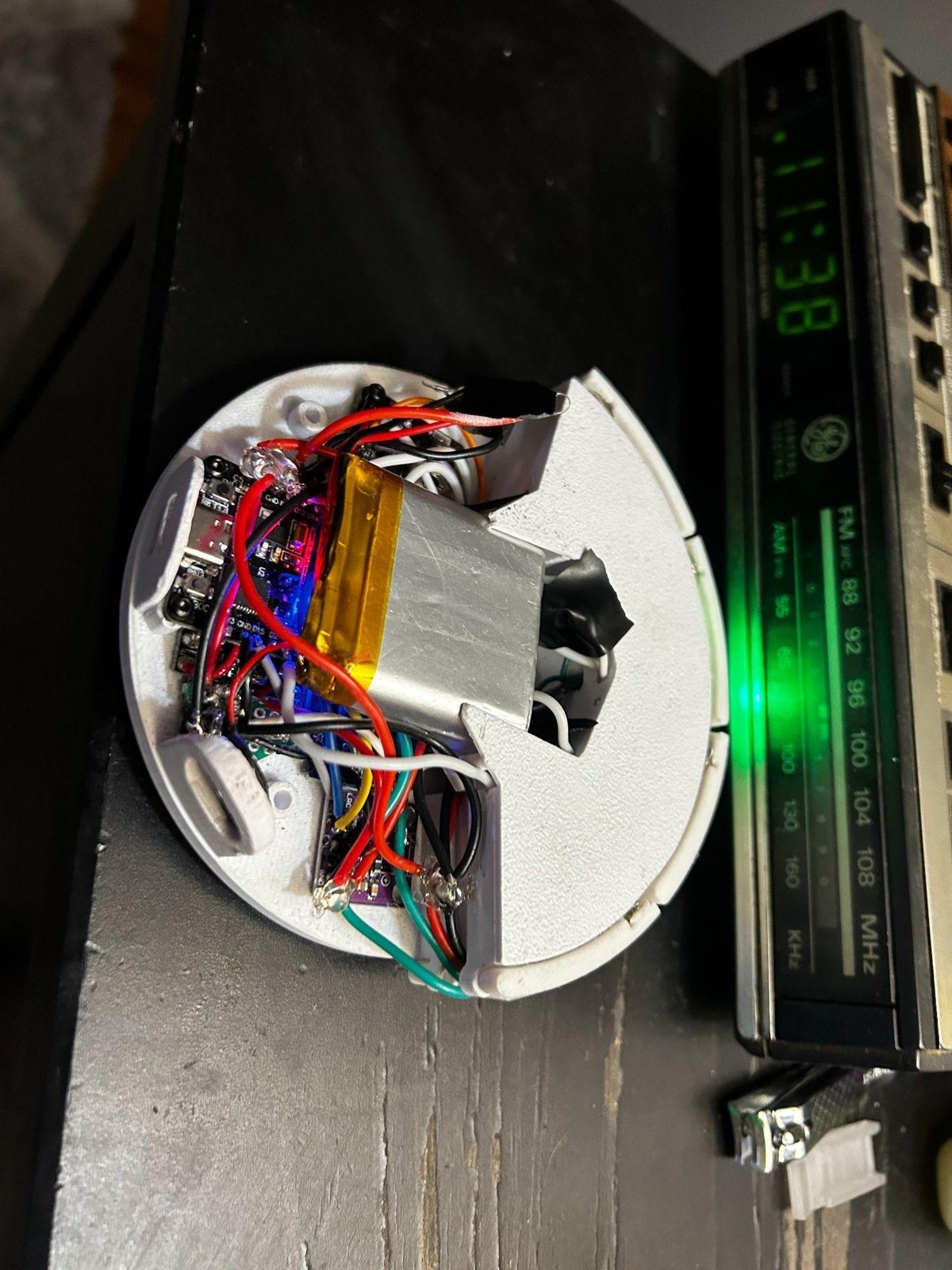
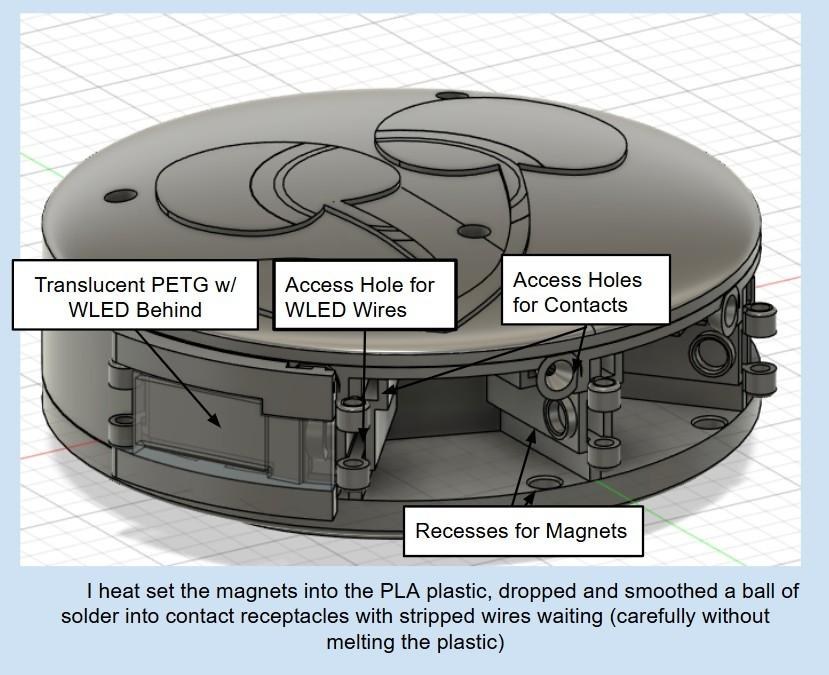
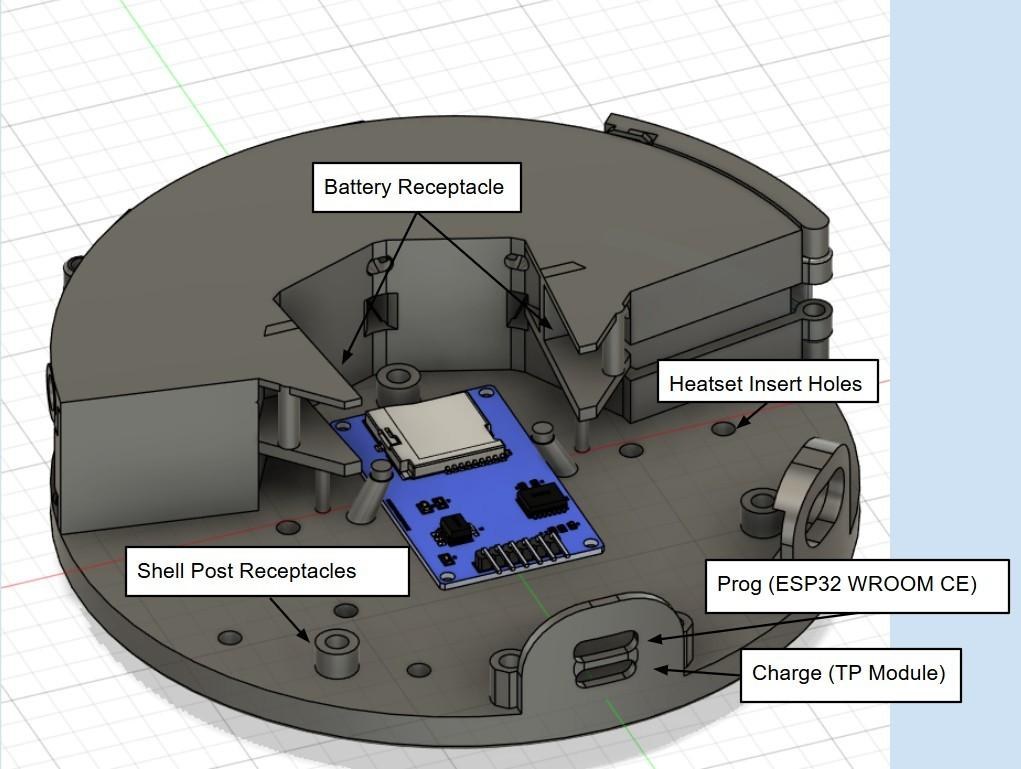
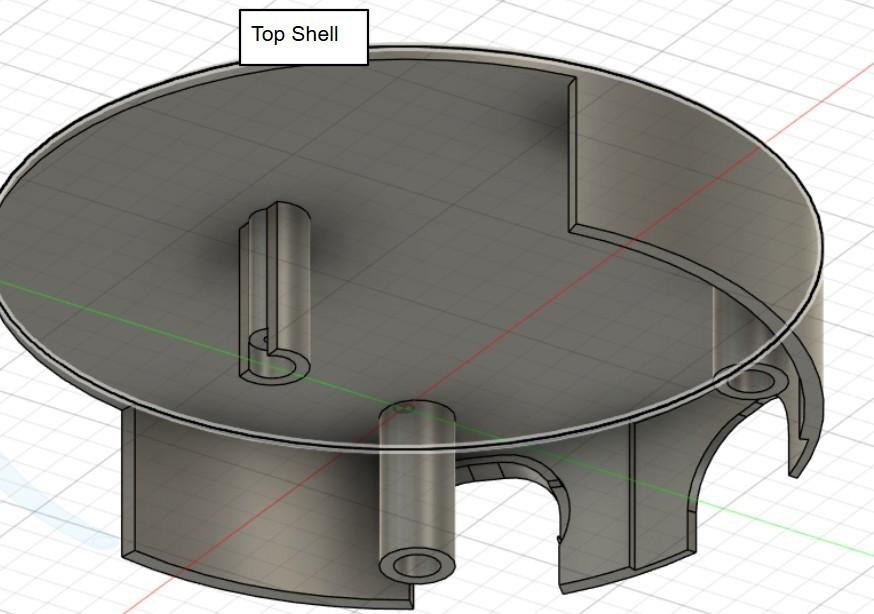
The final iteration changed to a circular layout, doubling the available doses from two to four. It used two separable shell halves with no wires connecting them, making the internals easier to access. The shell design was inspired by a Sovol 3D printer heating assembly I was repairing at work.
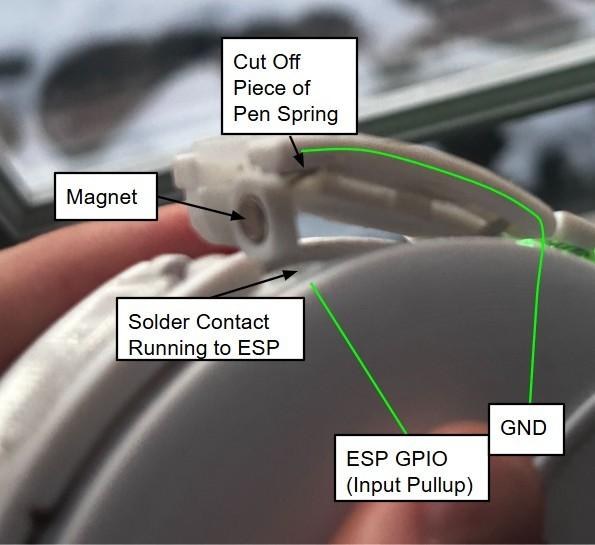
Hinged compartment lids used magnets, metal contacts, and pieces of pen spring to complete sensing circuits when closed. Opening a lid changed the circuit state at an ESP32 sensor pin, replacing the earlier limit-switch approach. This detects compartment opening; it does not directly verify that medication was swallowed.
The LED strand provided red reminder cues and a green completion cue. The design used color associations as an intended usability aid, rather than a demonstrated clinical outcome.
Electronics and Audio
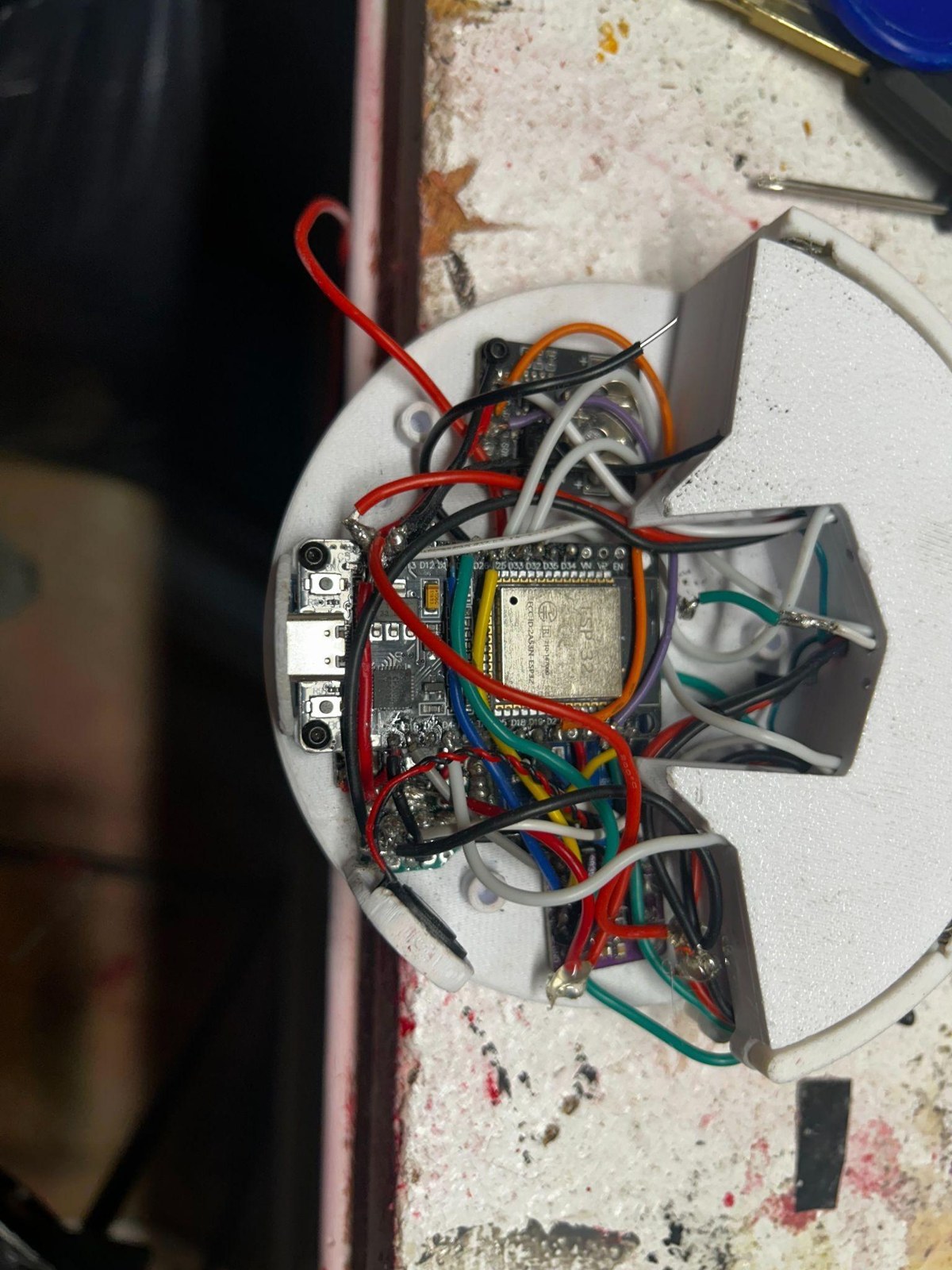
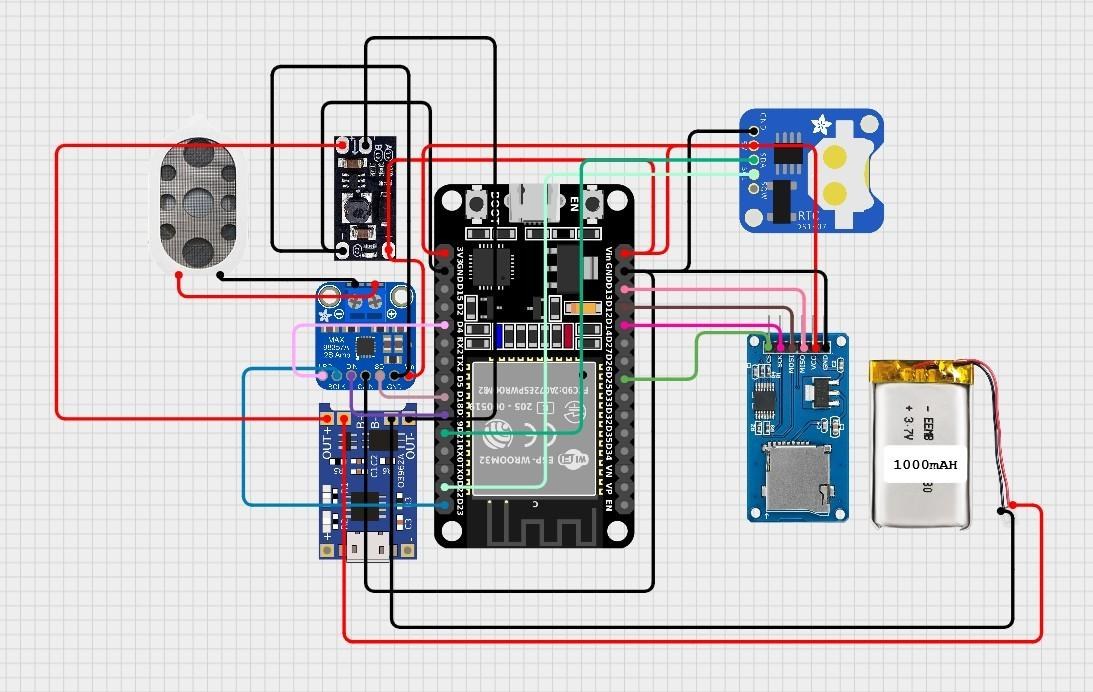
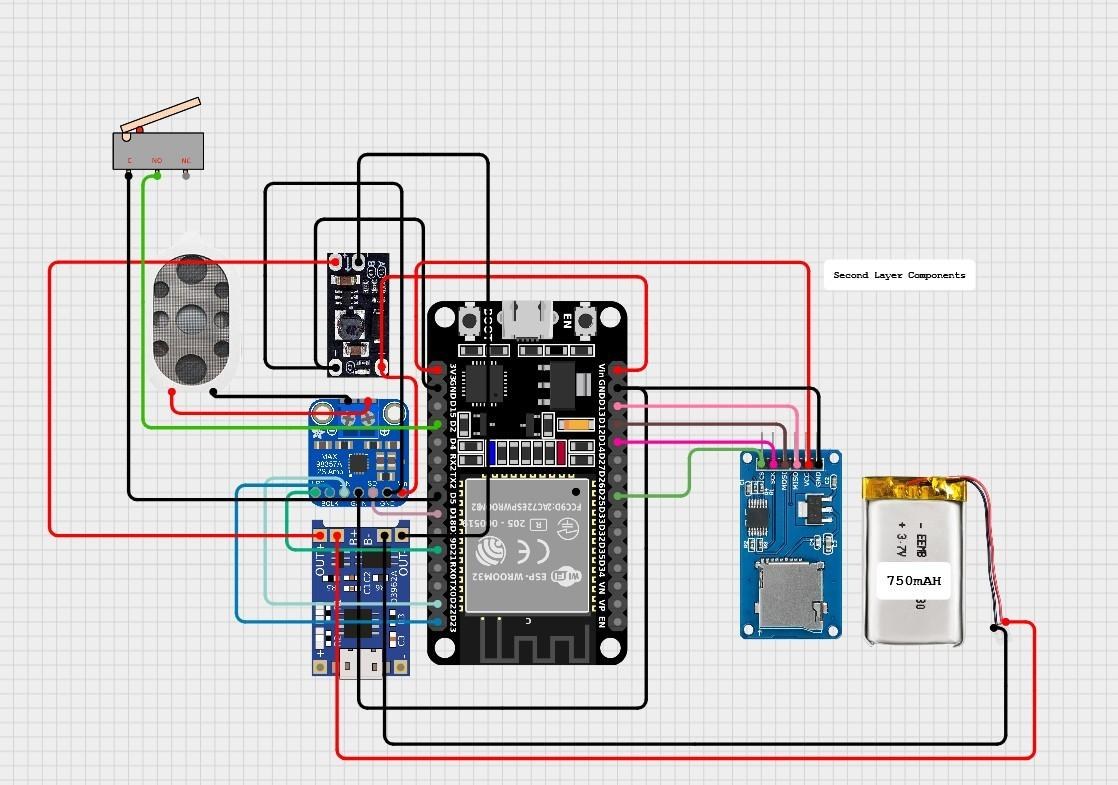
The report and poster document an ESP32 controller, an RTC module, an SD card module for larger audio files, a MAX98357A I2S amplifier feeding a 4-ohm speaker, and a LiPo battery with a TP charging module. The final wiring also added an LED strand and four compartment-sensing inputs.
The SD card replaced the first versions’ audio stored directly in board memory, allowing longer and more complex recordings. The report notes that the final wiring illustration omits some additions, including the RTC, larger battery, and extra sensor inputs.
Wi-Fi Setup Without the Arduino IDE
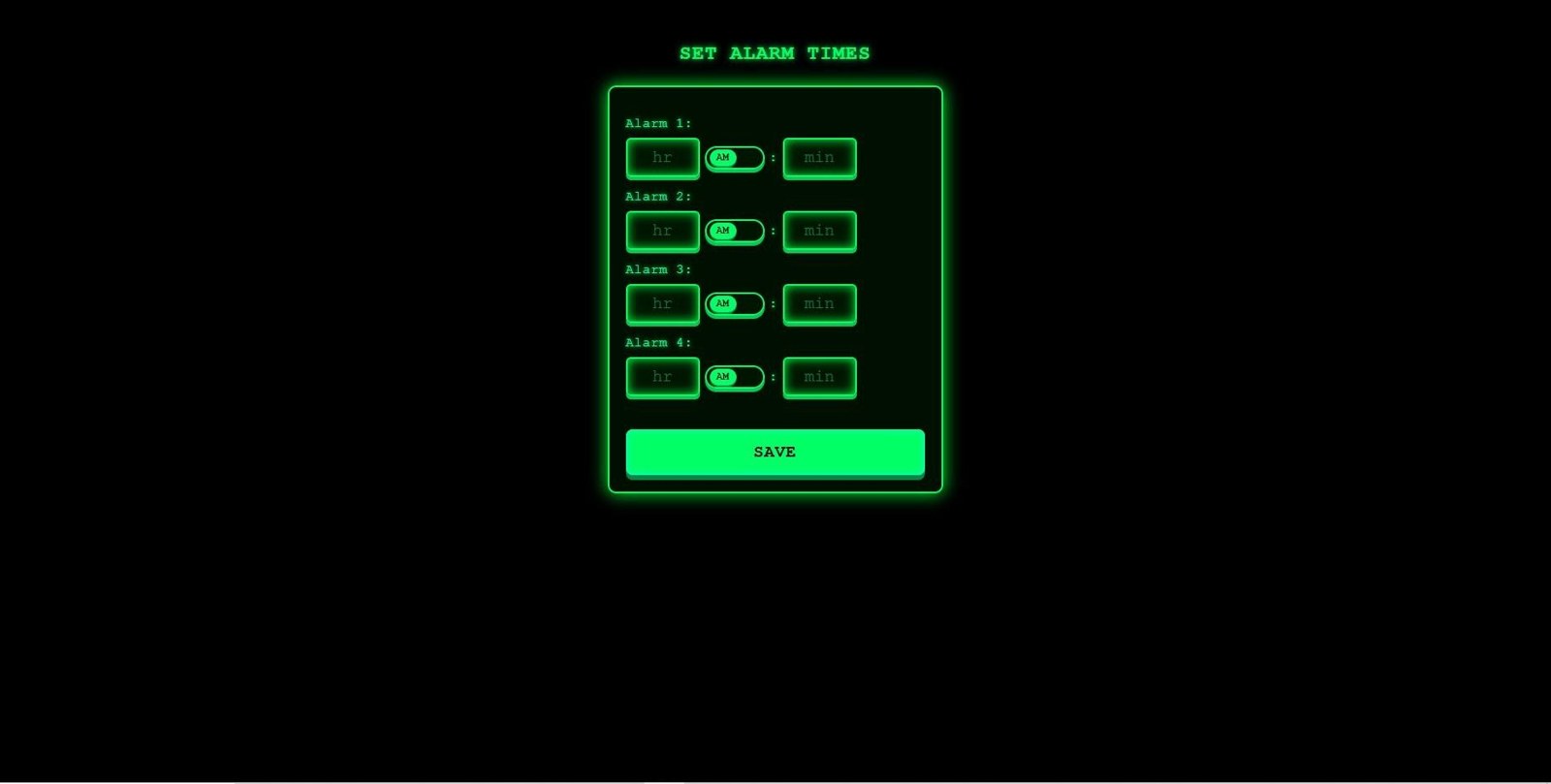
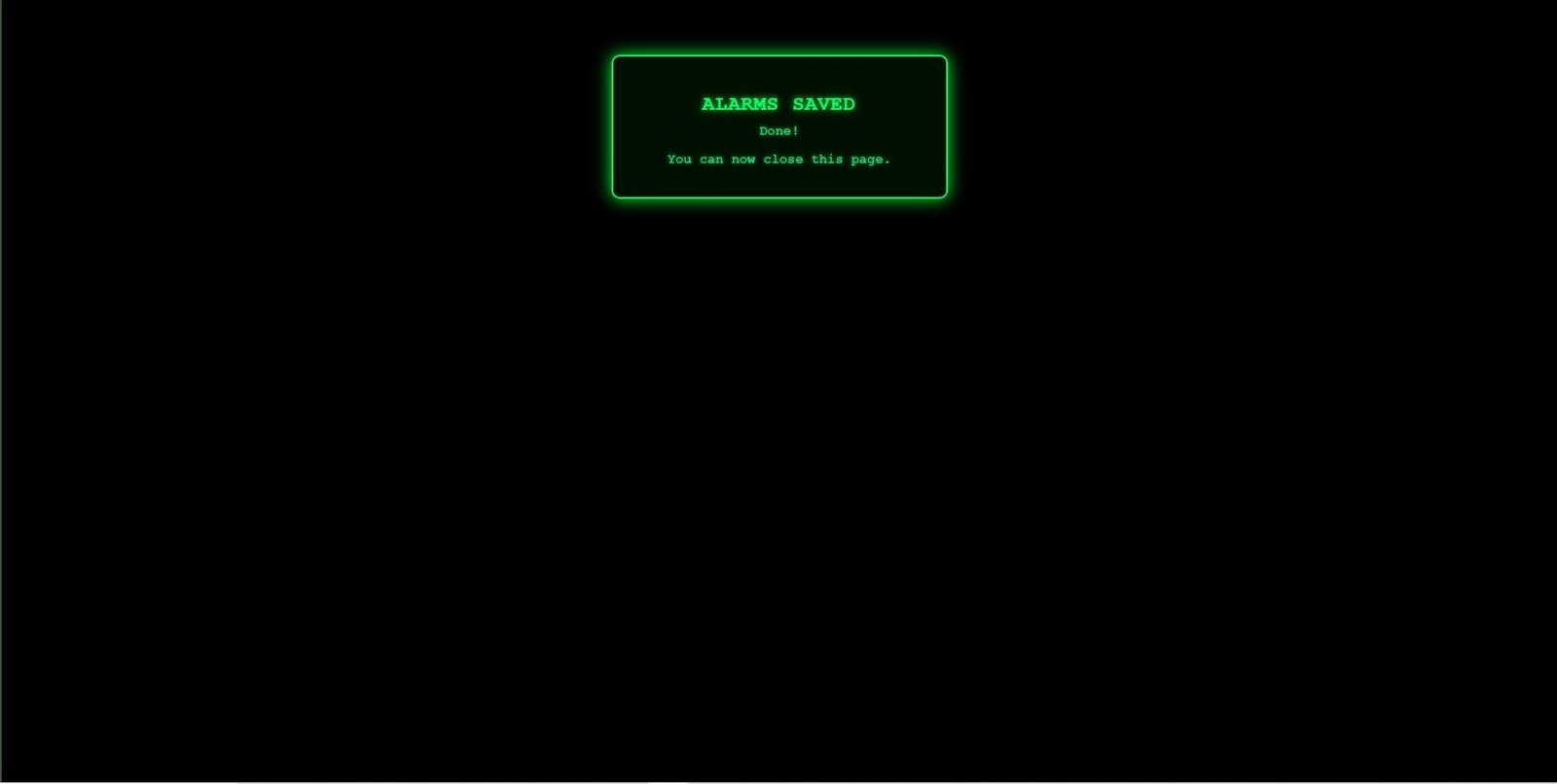
The final prototype introduced a captive portal for alarm configuration. Connecting a Wi-Fi-capable device to the MEDREMINDER network opened a terminal-inspired setup interface where alarm times could be entered. This removed the need for a caregiver to edit and upload source code just to change the schedule.
What I Learned and What Comes Next
This project taught me how mechanical design, electronics, audio, and setup flow interact in a medical-adjacent prototype. Each version addressed problems revealed by the one before it.
The report proposes future caregiver alerts for missed medication, audio uploads over the internet or USB instead of removing the SD card, and a custom PCB with manufacturing-friendly enclosure design. These are proposed improvements, rather than features documented as implemented.
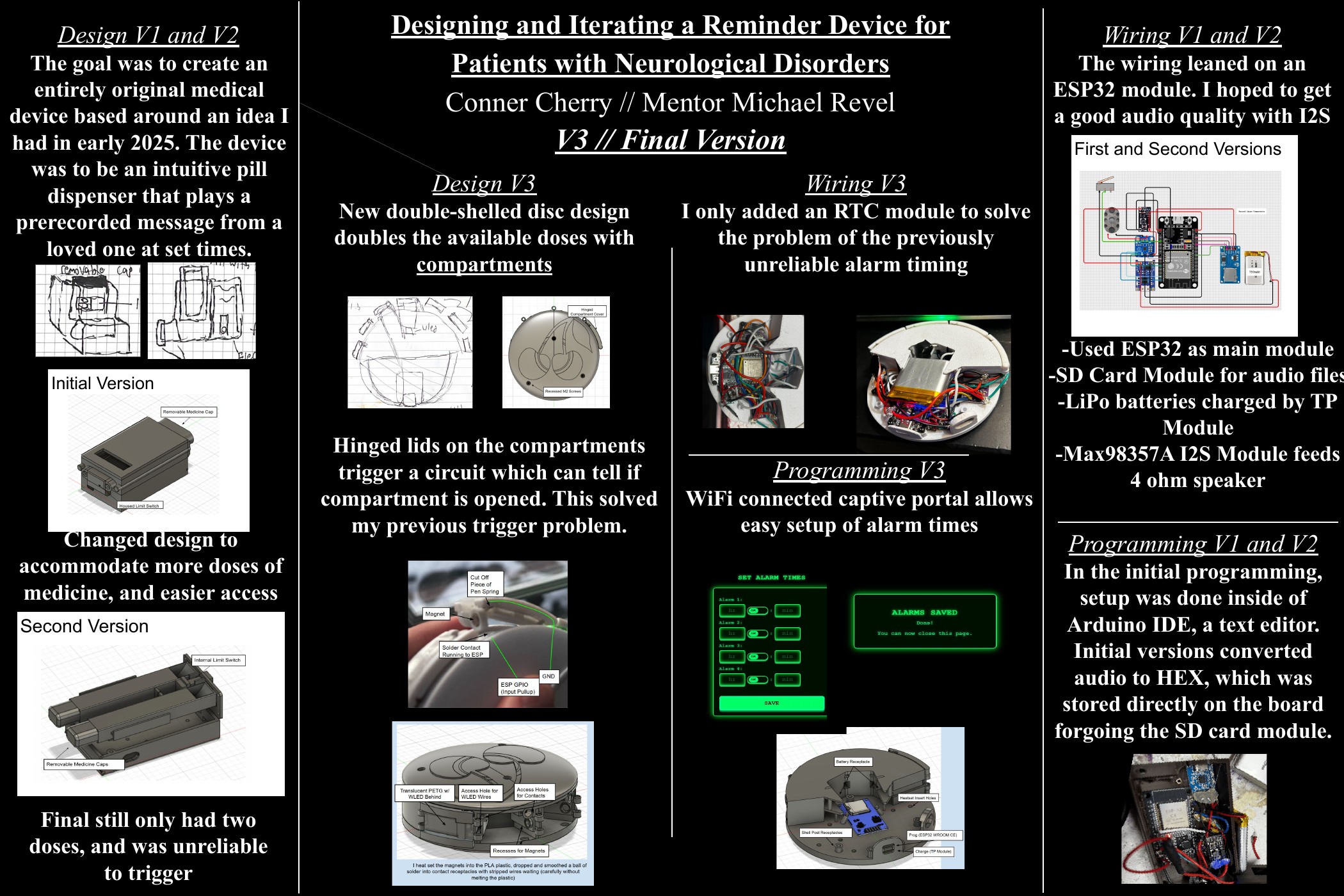
Research Poster
The poster brings the three versions together, showing the enclosure changes, audio hardware, compartment sensing, and captive portal setup.